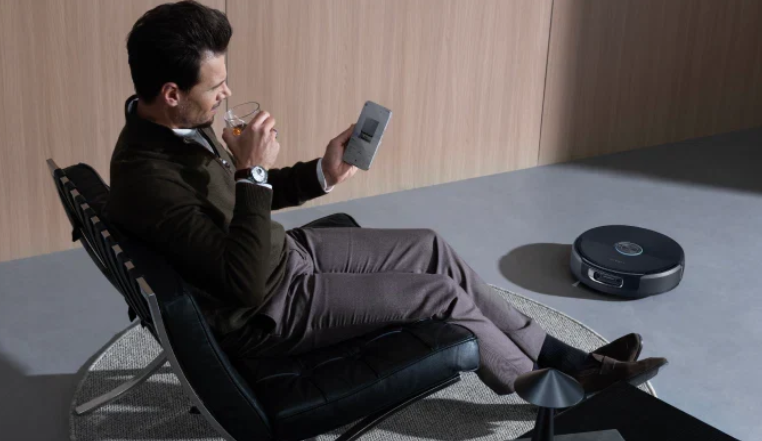
The most noticeable change in home cleaning is not that robots can move around a room without assistance. It is that modern machines are becoming capable of making decisions about how a floor should be cleaned once they get there. A living room may contain a mixture of hard flooring, rugs, furniture, cables, crumbs, and pet hair, while a kitchen can present completely different cleaning challenges. Instead of expecting the same suction level and cleaning movement to work everywhere, newer systems are being developed around adaptive behaviour. This makes the idea of the meilleur robot aspirateur laveur 2026 less about finding a machine with one impressive specification and more about finding a system that can respond intelligently to the conditions inside a real home.
Narwal’s current French range demonstrates how broad this technology has become. Its collection includes several robot families and configurations, including Flow 2, Flow, Freo Z10 Ultra, Freo Z10, Freo Z10 Pro, Freo X10 Pro, Freo S, Freo Z Ultra, Freo X Ultra, and Freo X Plus. The collection also includes replacement and maintenance products, showing that the robot itself is now only one part of a larger cleaning ecosystem.This variety also means that buyers need to look beyond the appearance of a machine and examine what happens before, during, and after every cleaning cycle.
Narwal’s 2026 buying guide takes this broader approach by looking at technical areas including suction performance, perception technology, active mopping, autonomy, and docking-station functions. It highlights an important point for anyone comparing current models: a large number on a specification sheet does not automatically translate into superior results in every home. The interaction between suction, brushes, navigation, floor recognition, water management, and maintenance automation can have a much greater influence on everyday usefulness.
From Simple Automation to Adaptive Cleaning
Early robotic vacuums were mainly designed around a straightforward concept: move across the floor, detect obstacles, collect loose debris, and return to the charging station. That concept solved an obvious problem, but it still required the machine to behave in largely the same way regardless of what it encountered. Modern systems are moving in a different direction. They combine sensors, mapping, cameras, software, brushes, suction control, and floor recognition so that cleaning can become more responsive.
This change is important because homes are not predictable environments. A robot may begin its route on a wooden floor, cross a rug, encounter a chair, pass beneath a sofa, and then enter a kitchen where dried marks require wet cleaning. Treating all these situations identically would be inefficient. Narwal’s 2026 technical information reflects this shift toward adaptive cleaning by combining environmental perception with dynamic cleaning technologies rather than presenting vacuuming as a single fixed operation.
Why Suction Numbers Do Not Tell the Whole Story
Suction power remains one of the easiest specifications to compare because it is represented by a clear number. However, a robot’s ability to collect dust is influenced by much more than maximum suction. Airflow, brush geometry, the distance between the cleaning head and floor, dust-path design, filter performance, and automatic power adjustments can all affect how efficiently particles are removed.
Narwal’s 2026 guide discusses systems reaching suction levels of up to 31,000 Pa while also explaining why aerodynamic efficiency and dynamic power management matter. The guide’s CarpetFocus technology is designed to increase suction and alter brush behaviour when the robot identifies carpet, rather than simply applying the same cleaning intensity everywhere. This approach illustrates why buyers should consider how power is used instead of judging a machine entirely by its maximum rating.
The Growing Importance of Environmental Perception
A robot that can see an obstacle is useful, but recognizing what that obstacle actually is can provide a much more sophisticated cleaning experience. Everyday floors often contain objects that should not be pushed, dragged, or vacuumed. Shoes, cables, children’s toys, pet items, and other small objects can appear unexpectedly during a scheduled cleaning cycle.
Narwal’s 2026 guide describes a hybrid perception approach involving local and cloud-based AI and identifies object-recognition capabilities for items such as cables, shoes, toys, and pet-related obstacles. It also discusses camera-based perception as part of the wider NarMind system. Better perception can therefore influence more than navigation. It can help determine where the robot should travel, which areas need attention, and how it should respond when the environment is not perfectly prepared for cleaning.
Active Mopping Is Becoming a Different Category
There is a significant difference between attaching a damp pad to a moving robot and creating an active floor-washing system. A passive pad mainly relies on the robot’s movement to create cleaning contact. An active system can introduce additional mechanical movement, controlled water delivery, pressure, and dirty-water collection to make the process more deliberate.
Narwal’s 2026 technical guide describes its Track Mop technology as an active mopping approach using water heated to 60°C. The system is presented as supplying clean water to the microfiber cleaning surface while collecting used water separately. This distinction matters because the purpose of mopping is not simply to introduce moisture. Effective wet cleaning depends on how that moisture is applied, how the cleaning surface moves against the floor, and what happens to the water after it has picked up dirt.
What Happens When Vacuuming and Mopping Work Together
Combining dry and wet cleaning allows a robot to approach a floor as a complete surface rather than dividing the job into two separate manual tasks. Loose particles can be removed first while the wet-cleaning system deals with marks and residue. The exact sequence and behaviour depend on the model, but the broader concept is to make the robot capable of handling more of the routine without requiring the homeowner to switch appliances.
Narwal’s current range is built around this combination of vacuuming and washing, while its 2026 guide places active mopping alongside suction and environmental perception as major technical areas. This is particularly useful in homes where hard floors make wet cleaning a regular requirement. Instead of thinking of the mop as an accessory attached to a vacuum, consumers can increasingly evaluate the two functions as parts of one integrated cleaning process.
Smart Floor Recognition Makes Mixed Homes Easier to Manage
Many homes contain several types of flooring. A robot may encounter tiles in a kitchen, wood or laminate in a hallway, rugs in a bedroom, and thicker carpet in a living room. Each surface can respond differently to suction, brush movement, and cleaning pressure.
Narwal’s CarpetFocus technology is intended to address this issue by recognizing carpet and modifying suction and brush behaviour accordingly. This kind of automatic adjustment can reduce the need for homeowners to create complicated room-by-room settings. More importantly, it demonstrates a broader direction in robotic cleaning: machines are increasingly expected to react to the floor rather than simply follow a predetermined routine.
Why the Docking Station Has Become So Important
Charging was once the main purpose of a robot’s docking station. Today, the station can become a central maintenance hub that handles several tasks after the robot finishes cleaning. This changes the ownership experience because a robot that needs to be manually emptied and washed after every cycle cannot provide the same level of convenience as a system that manages much of that work itself.
Narwal’s technical guide describes multifunction station capabilities including mop washing, drying, dust collection, clean-water management, dirty-water handling on supported configurations, and automatic cleaning-solution dosing. For someone choosing a machine primarily to save time, these functions can be as important as suction power. The robot may spend only a portion of its life actively moving around the home, while the station can influence what happens before and after every cleaning cycle.
Automatic Dust Management Reduces Repetitive Chores
A robot that cleans frequently can collect a considerable amount of debris. This becomes particularly noticeable in households with pets, children, carpets, or busy entrances. If the dustbin has to be emptied after every session, some of the convenience of automation disappears.
Narwal’s 2026 guide discusses automatic dust collection and systems capable of extending the interval between manual emptying under specified conditions. The exact duration will naturally depend on household conditions, but the underlying idea is valuable: the cleaning process becomes more autonomous when waste management is included in the system rather than left entirely to the owner.
Battery Performance Is About Coverage, Not Just Capacity
Battery capacity is another specification that can be misleading when considered by itself. A robot cleaning thick carpet at high suction will use energy differently from one performing a light maintenance cycle across smooth flooring. Navigation, obstacle avoidance, mopping, and repeated route adjustments can also affect the total energy required.
Narwal’s guide discusses high-capacity battery systems and intelligent battery management as part of the overall cleaning architecture. For buyers, the practical question should therefore be whether a robot can cover the areas that matter, recharge efficiently when necessary, and continue its routine without creating unnecessary interruptions.
What Makes a Robot Suitable for Everyday Use?
The most useful robot is not necessarily the one with the longest specification sheet. It is the one whose features solve actual problems inside the home.
Consider these areas before making a decision:
- Floor types: Determine whether the home has mostly hard floors, rugs, carpets, or a mixture.
- Pet hair: Homes with animals may benefit from stronger suction and anti-tangle brush systems.
- Furniture: Dense furniture layouts increase the importance of navigation and obstacle recognition.
- Wet cleaning: Kitchens and other hard-floor areas may make active mopping more valuable.
- Maintenance: A multifunction station can reduce manual cleaning of the robot itself.
- Property size: Larger homes place greater demands on battery management and mapping.
- Consumables: Check whether replacement brushes, filters, mops, dust bags, and cleaning products are readily available.
- Cleaning frequency: Daily maintenance may benefit more from automation than occasional deep cleaning.
Narwal’s current collection includes dedicated replacement products such as dust bags, mops, filters, side brushes, anti-tangle brushes, and detergents. That is an important reminder that robotic cleaning should be considered as a long-term system rather than simply a device purchased on one day.
The Role of an aspirateur robot in a Real Household
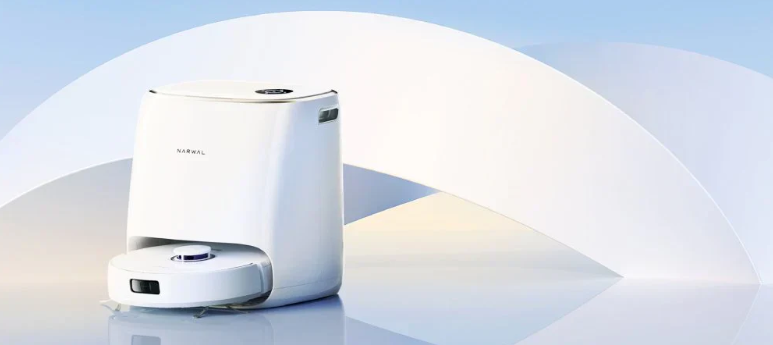
An aspirateur robot becomes most valuable when it is used as part of a regular maintenance routine rather than as a replacement for every form of cleaning. Frequent automated cycles can prevent dust and loose debris from building up, meaning that manual deep cleaning may become less frequent or less demanding.
This approach also changes the expectations placed on the machine. Instead of asking it to rescue a neglected floor after weeks without cleaning, homeowners can use automation to maintain a reasonable baseline every day or several times a week. Narwal’s current range is designed around this broader combination of vacuuming, mopping, navigation, and automated maintenance. The result is a more realistic role for robotic cleaning: not eliminating household cleaning altogether, but taking responsibility for a large portion of the repetitive floor-care workload.
Choosing Technology Instead of Chasing Specifications
It is tempting to compare robots by selecting the largest suction figure, longest battery rating, or greatest number of advertised features. However, specifications become meaningful only when they solve a real problem. A household with pets may benefit greatly from brush and suction technology, while another home may gain more from advanced mopping and automatic station maintenance.
Narwal’s 2026 buying guide ultimately focuses on this complete-system approach. Its comparison considers suction, perception, active mopping, autonomy, and the station instead of treating one number as the definition of quality. This makes a stronger framework for comparison because it reflects what the owner actually experiences during repeated cleaning cycles.
Frequently Asked Questions
Is higher suction always better?
Not necessarily. High suction can be particularly useful for carpets, pet hair, and embedded debris, but efficient airflow, brush design, floor recognition, and power management also affect cleaning results. Narwal’s 2026 guide specifically emphasizes the interaction between suction and the rest of the cleaning system.
What is active mopping?
Active mopping uses more than a passive damp pad. It can involve mechanical cleaning movement, controlled water delivery, pressure, and dirty-water collection. Narwal describes its Track Mop technology as using water heated to 60°C for active floor cleaning.
Does AI perception really matter in a robot vacuum?
It can, particularly in homes where objects frequently remain on the floor. Narwal’s guide describes object recognition for items including cables, shoes, toys, and pet-related obstacles.
Why should I compare the docking station?
Because it can determine how much manual maintenance remains after cleaning. Advanced stations can wash and dry mops, collect dust, manage water, and dose cleaning solution depending on the model.
Are robot cleaners suitable for large homes?
They can be, particularly when the system combines accurate mapping, sufficient battery capacity, and intelligent recharge management. Actual coverage depends on the home’s layout, floor types, cleaning intensity, and the specific robot.
Do robotic cleaners eliminate manual cleaning completely?
No. They are best viewed as automated maintenance tools. Stairs, inaccessible areas, unusual spills, furniture surfaces, and occasional deep cleaning can still require human attention.
Final Thoughts
The biggest improvement in robotic floor care is not a single new feature. It is the way different technologies are being connected. Suction can respond to the floor, perception can influence navigation, active mopping can tackle residue, and the docking station can handle much of the maintenance that previously had to be performed manually. Narwal’s 2026 technical information reflects this movement toward complete cleaning systems rather than simple automated vacuums.
For consumers, this creates a better way to compare products. Instead of asking which robot has the biggest number, it makes more sense to ask which machine fits the home’s surfaces, cleaning frequency, furniture layout, pet situation, and desired level of automation. The current Narwal French collection demonstrates how many different combinations are now available, with several robot families and a broad selection of supporting accessories.
The real promise of robotic cleaning is therefore consistency. A machine that quietly removes everyday dust, manages suitable wet-cleaning tasks, recognizes obstacles, adapts to different surfaces, and returns to a station that can maintain its cleaning components can take a significant amount of repetitive work away from the homeowner. In that sense, the evolution of robotic floor care is not simply about making machines more powerful. It is about making the entire routine smarter, more adaptive, and easier to live with.